

The Global Problem
Ecological monitoring has not scaled with
environmental collapse.
The Platform
From drone imagery to
ecological intelligence.
A four-stage AI pipeline built for distinct ecological perception tasks.
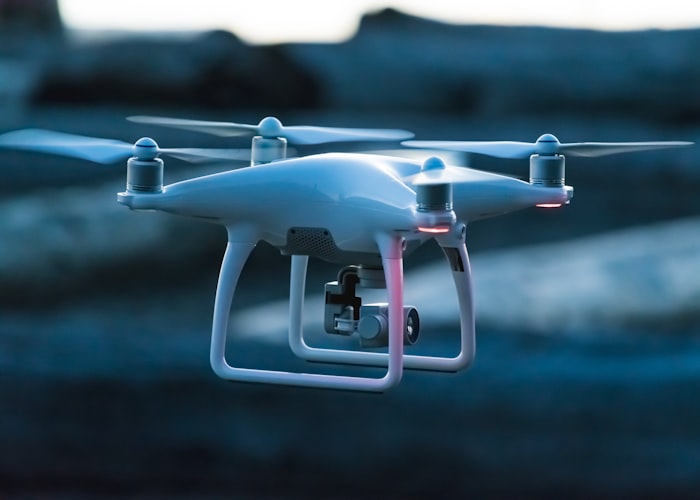
Systematic grid flights over intertidal survey zones. 80% overlap enables photogrammetric reconstruction and raw RGB orthomosaics at 2.1cm/px.
Specifications
Research Foundation
Built on peer-reviewed
ecological and AI research.
EcoVision 2.0 is grounded in reproducible science, GIS workflows, and model validation.
Transformer Vegetation Segmentation
Comparison content from the research script, preserved for later editorial selection.
UAV Species Intelligence
Comparison content from the research script, preserved for later editorial selection.
Dominance Mapping Framework
Comparison content from the research script, preserved for later editorial selection.
Ecological AI Infrastructure
Comparison content from the research script, preserved for later editorial selection.
Spatial Aggregation Systems
Comparison content from the research script, preserved for later editorial selection.
MAPIE Conformal Prediction
Comparison content from the research script, preserved for later editorial selection.
Technology Stack
Institutional-grade
AI infrastructure.
Four architectural layers from edge delivery to research HPC.
Frontend Intelligence
- Next.js · React
- Cognito SSO
- Presigned S3 Uploads
- CloudFront CDN
AI Inference Layer
- SegFormer-B5
- ConvNeXt-Base
- MAPIE Conformal
- PyTorch · CUDA
Cloud Infrastructure
- AWS ECS · Lambda
- SQS · S3 buckets
- EC2 GPU
- CloudWatch
Research Compute
- Keele HPC · SLURM
- MLflow · DVC
- VPN
- TensorBoard
Roadmap
From saltmarsh monitoring to
ecological intelligence.
British Saltmarsh
2024-25
Developed in Partnership With